
Table of Contents
The Morning My Nose Met Reality
I remember waking up last Tuesday, stretching out under the covers, only to be hit by a cloud of something that smelled suspiciously like a damp basement mixed with old cheese. My golden retriever, Barnaby, was curled up right against my pillows, looking at me with those soulful, “I love you” eyes. I loved him back, of course, but at that moment, I couldn’t help but wonder: why does my dog stink so much lately?
It wasn’t just the typical “doggy” smell we all sign up for when we bring a furry friend into our lives. This was different. It was pungent, localized, and honestly, a bit worrying. Over the years, I’ve learned that a dog’s scent is often a window into their overall well-being. It isn’t just about a missed bath; it’s a complex interplay of biology, environment, and health.
I spent the next several weeks investigating every inch of Barnaby, talking to specialists, and reflecting on my own habits as a pet owner. What I found was that odors are rarely just “there.” They are signals. They tell us about what our dogs are eating, where they’ve been, and how their bodies are functioning.
Understanding the Natural Dog Scent
Before we dive into the “stink,” we have to acknowledge that dogs aren’t supposed to smell like vanilla candles or fresh linen. They have a natural musk. This scent is produced by sebaceous glands in their skin. These glands secrete oils that keep their coat waterproof and healthy.
I remember when I first brought home a hound mix years ago. Hounds have a notoriously “sturdy” smell. I used to scrub him once a week, thinking I was doing him a favor. Over time I learned that I was actually making it worse. By over-stripping those natural oils, his body went into overdrive to replace them, creating a cycle of oiliness and odor.
Understanding this baseline is crucial. A healthy dog should smell like… well, a dog. It’s a mild, earthy scent. If you find yourself asking “why does my dog stink” to the point where you don’t want them on the couch, we’ve moved past the natural baseline and into the territory of “the funk.”
When the “Frito Feet” Become Too Much
If you’ve ever sniffed your dog’s paws and thought of a bag of corn chips, you aren’t alone. This is so common it’s practically a meme in the dog world. For a long time, I thought it was just something Barnaby picked up from the grass.
Eventually, I learned that this scent is usually caused by Proteus or Pseudomonas bacteria. These bacteria, along with natural yeast, thrive in the moist, warm environment between a dog’s toes and pads. In moderation, this is totally normal. Our dogs sweat through their paws, and that moisture creates a tiny ecosystem.
However, when that corn chip smell turns into a “stale locker room” smell, it’s a sign that the yeast or bacteria has overgrown. I noticed Barnaby licking his paws more than usual during the humid summer months. This extra moisture from his saliva only fueled the fire. I had to learn to keep his paws dry and clean without being clinical about it, focusing on gentle wipes after walks in the rain.
The Deep Dive into Skin and Coat Health
One of the most frequent reasons people ask why does my dog stink is related to skin infections, specifically pyoderma or seborrhea. I’ve seen this happen when a dog develops allergies. They scratch, they create micro-tears in the skin, and bacteria move in.
The smell of a skin infection is hard to mistake once you’ve smelled it once. It’s a sweetish, sickly odor that seems to radiate off the dog even after a bath. In Barnaby’s case, it turned out to be a seasonal allergy to certain grasses. He wasn’t just “stinky”; he was uncomfortable.
I started looking at his skin beneath the fur. Instead of the healthy pink I expected, I saw patches of redness and a slight oiliness that stayed on my fingers after I petted him. This was a turning point for me. I realized that my focus on the smell was misplaced; I needed to focus on the inflammation. Once we addressed the allergy through a change in his environment and some soothing oatmeal rinses, the “stink” vanished.
The Silent Culprits: Ears and Mouth
Sometimes the smell isn’t coming from the body at all, but from specific “pockets” of odor. I remember sitting on the floor with Barnaby, playing tug-of-war, when a waft of something truly foul hit me. It wasn’t his coat. It was his breath.
Dental disease is a massive contributor to dog odor. Plaque and tartar build-up lead to gingivitis, which smells like rotting protein. But it goes deeper than just bad breath. Chronic oral infections can actually affect a dog’s heart and kidneys. I felt a pang of guilt realizing I hadn’t been as diligent with his teeth as I should have been.
Then there are the ears. If your dog has floppy ears, like Barnaby, they are basically living with two warm, dark, unventilated tents on the sides of their head. This is a paradise for yeast. A yeast infection in the ear smells like old beer or sourdough bread. If it’s a bacterial infection, it can smell much worse. I learned to do a “sniff test” of his ears every Sunday. If they smell like anything other than skin, it’s time for a gentle cleaning.
The Awkward Conversation: Anal Glands
We have to talk about it: the “fishy” smell. If you’ve ever noticed a sudden, sharp, metallic, or fishy odor coming from your dog—usually after they’ve been startled or while they’re sleeping—it’s likely their anal glands.
These two small sacs near the anus produce a unique scent-marker that dogs use to identify each other. Usually, these glands empty naturally when a dog has a bowel movement. However, if the stool is too soft, or if the dog has certain structural issues, the fluid builds up.
My pet used to “scoot” across the carpet, and for the longest time, I thought he just had an itch. It was actually his way of trying to relieve the pressure in those glands. When they leak, the smell is incredibly potent. This isn’t a grooming issue; it’s a physical one. I found that increasing the fiber in his diet helped tremendously, but sometimes a trip to the vet for a manual expression is the only way to clear the air.
Environmental Factors and Rolling in It
We can’t ignore the obvious: sometimes dogs just like to smell bad. From an evolutionary standpoint, rolling in “smelly stuff” (dead things, manure, or just damp earth) might have helped their ancestors mask their own scent from prey.
I once took Barnaby to a beautiful park, only for him to find the one spot where a fish had washed up by the pond. He didn’t just sniff it; he did that shoulder-first slide into it with pure joy. In that moment, the answer to why does my dog stink was very clear: because he chose to.
Dealing with environmental “stink” is about management and immediate action. But it’s also about understanding that to him, that rotting fish was the finest perfume in the world. Being frustrated with him didn’t help, but having a plan for a “de-skunking” style bath certainly did.
Building Trust Through Grooming
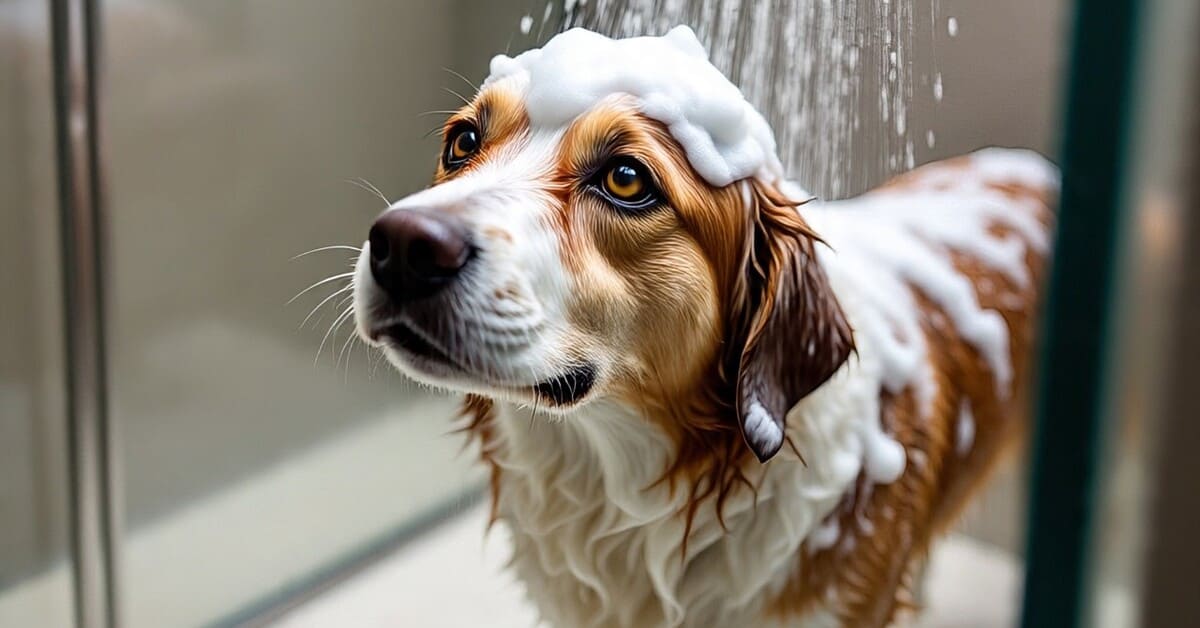
One of the biggest mistakes I made early on was treating bath time and grooming like a chore that had to be “done” to the dog. I would wrestle Barnaby into the tub, spray him down, and wonder why he was shaking and miserable. This created a cycle of stress.
I learned that for grooming to be effective in managing odor, it has to be a process built on trust. I started doing “dry runs.” We would sit in the bathroom with the water off, and I’d just give him high-value treats. Then, I’d turn the water on low and just let it run while we played.
Over time, he learned that the tub wasn’t a place of punishment. When he’s relaxed, his pores are less “tight,” and I can actually get him cleaner. More importantly, he trusts me to handle his sensitive areas—his paws, his ears, and his tail. If your dog hates being cleaned, they will never be truly clean, because you’ll always be rushing to finish the job.
Common Mistakes We All Make
In my journey to find out why does my dog stink, I fell into several traps that I see other owners falling into all the time:
Using Human Shampoo: I used my own expensive moisturizing shampoo on Barnaby once. His skin broke out in a dry, flaky mess within days. A dog’s skin pH is much more neutral than ours; human products are too acidic and strip their protective barriers.
Masking Instead of Cleaning: I tried those “pet colognes.” All they did was create a “floral-scented wet dog” smell that was arguably worse than the original.
Ignoring the Bedding: You can wash the dog ten times, but if they go right back to a bed that hasn’t been laundered in three months, the smell will transfer right back. I now wash Barnaby’s blankets once a week in hot water with scent-free detergent.
Assuming it’s “Just Old Age”: Older dogs can smell more, often due to declining kidney function or dental issues. Never write off a new smell as just “aging.”
Interactive Reflection: Assessing Your Dog’s Scent
Take a moment to sit with your dog. Without overthinking it, try to answer these questions:
Where is the smell strongest? (Mouth, ears, rear end, or the whole body?)
What does it remind you of? (Bread, fish, rotting trash, or just “dampness”?)
Are there behavioral changes? (Is your dog licking more, shaking their head, or acting lethargic?)
When was the last time their bedding was washed?
If the smell is localized (just the ears or just the mouth), it’s likely a specific medical issue. If it’s the whole body, look at diet and skin health.
Frequently Asked Questions
A Long-Term Approach to Freshness
Living with a dog means living with a bit of nature in your house. Barnaby will never smell like a bouquet of roses, and I wouldn’t want him to. His scent is part of who he is. But when that scent turns into a “stink,” it’s my job as his person to listen to what his body is telling me.
By focusing on high-quality nutrition, regular (but not excessive) grooming, and staying vigilant about his dental and ear health, I’ve managed to keep the “basement smell” at bay. It took patience and a lot of trial and error, but the reward is being able to cuddle up on the couch without having to hold my breath. Part of that routine involves keeping his paws clean and tidy; if you struggle with the grooming aspect, you might find my guide on How to Trim Dog’s Nails Stress-Free helpful for building that necessary trust.
Our dogs give us everything they have. The least we can do is make sure they feel clean, comfortable, and healthy in their own skin.