
Table of Contents
How to Train Your Pet Mouse So It Wants to Play With You
Learning how to train your pet mouse is not about forcing tricks — it is about building trust so your mouse wants to interact with you.
Most mice are fearful at first. They hide, freeze, or run. That distance can make owners feel disconnected.
The solution is gentle, structured, reward-based training that turns fear into curiosity.
How to train your pet mouse means using gentle handling, rewards, and consistent interaction to build trust. With positive reinforcement and daily playtime, mice learn to feel safe around you and willingly engage in games, exploration, and bonding activities.
Why Training Your Pet Mouse Matters
Mice are intelligent social animals. Without stimulation, they become stressed and withdrawn.
Training improves:
Mental health
Physical activity
Bonding
Lifespan
Confidence
A trained mouse will:
Walk onto your hand
Follow treats
Explore outside the cage
Play with toys
Respond to your presence
Key Takeaway: Training transforms a fearful mouse into a curious companion.
Understanding Mouse Psychology Before Training
Before you begin learning how to train your pet mouse, you must understand how mice think.
Mice are:
Prey animals
Easily startled
Highly scent-driven
Curious once safe
They do not respond to force. They respond to repetition + safety + rewards.
Step 1: Create a Safe Training Environment
Your mouse must feel secure before any learning begins.
Do this first:
Place cage in a quiet area
Avoid sudden noises
Provide tunnels and hiding spots
Use soft bedding
A stressed mouse cannot learn.
Before you even think about the first lesson, you must consider the “classroom.” A mouse cannot learn if it feels exposed. Imagine trying to solve a complex math problem while standing on a tightrope over a pit of lions. That is how a mouse feels in a bright, loud, or open space.
The best place to start learning how to train your pet mouse is right in their own habitat or a secure, “playpen” area where they feel grounded. Ensure the lighting is dim—mice are crepuscular and feel more confident in the shadows. Turn off the TV, put the dog in another room, and lower your voice.
A safe environment also means providing hides. A mouse that knows it has a “escape hatch” nearby will actually be braver. If they know they can hide, they are more likely to stay out and interact with you. Training is a conversation, and no one speaks well when they are terrified.
Step 2: Let Your Mouse Get Used to Your Scent
Before you ever touch the mouse, let it learn who you are.
How:
Place your clean hand in the cage
Do not move
Let the mouse sniff you
Repeat daily
This teaches that your scent = safety.
For a mouse, the nose is more important than the eyes. Your scent is your signature. Before you try to touch them, they need to associate your smell with safety. This is a passive but vital stage of how to train your pet mouse.
Start by simply placing your hand near the cage. Don’t move. Don’t reach for them. Just let the air carry your scent to them. You can also take a piece of fleece or a clean tissue, rub it against your skin to transfer your oils, and place it in their nesting area. They will likely shred it to make a bed.
When they sleep on your scent, they are subconsciously accepting you into their “colony.” Eventually, you will see them sniff the air when you enter the room. They aren’t just checking for food; they are recognizing a friend. This scent-bonding is the invisible foundation of everything that follows.
Step 3: Use Food to Build Trust
Food is the fastest way to train a mouse. So use food to build trust.
Best treats:
Sunflower seeds
Cooked rice
Tiny bits of banana
Oats
Hold the treat and wait.
The mouse will come.
That moment is the start of training.
If scent is the foundation, food is the bridge. Mice have incredibly high metabolisms and a natural curiosity about new flavors. To effectively master how to train your pet mouse, you must become the “bringer of snacks.”
Avoid putting treats in a bowl. Instead, offer them through the bars or at the door of the cage. Use long treats initially, like a sprig of millet or a long sunflower seed, so there is distance between your fingers and the mouse. As they grow bolder, shorten the distance.
The goal is to have the mouse approach you. Never force the interaction. When the mouse realizes that your arrival means a tiny piece of oat or a dab of unsweetened yogurt on a spoon, their fear begins to melt into anticipation. You are no longer a giant; you are a vending machine of joy.
Step 4: Teach Your Mouse to Step on Your Hand
This is the foundation of how to train your pet mouse.
Place treat on your palm
Keep hand still
Let mouse walk on you
Do not grab
After a few days, your mouse will walk onto your hand without fear.
This is the “handshake” of the rodent world. Once your mouse is comfortably taking treats from your fingers, it’s time to ask for a bit more bravery. Place your palm flat on the floor of the cage, with a treat resting in the center of your hand.
Your mouse will likely “stretch” at first—keeping their back legs firmly on the cage floor while reaching their front paws onto your skin. This is a huge leap of faith. Be still. Let them retreat if they need to. Eventually, they will place all four paws on your hand to reach the reward.
Do not lift your hand yet. Just let them get used to the feel of your skin, the warmth of your palm, and the slight movements of your muscles. Once they eat the treat and stay on your hand, you have officially moved from “stranger” to “perch.”
Key Takeaway: A mouse that steps onto your hand trusts you.
Step 5: Turn Training into Play
Now training becomes fun.
Games you can use:
Paper towel tunnels
Cardboard mazes
Treat scavenger hunts
Finger-follow games
By carefully establishing a Safe Training Environment, your mouse will start to see you as a natural, non-threatening part of its daily world rather than a source of fear.
Mice are naturally inquisitive. Once they trust your hand, you can begin to guide their movements. Use a treat to lure them in a small circle or over a small obstacle like a cardboard tube. This is where how to train your pet mouse starts to look like actual “training.”
Keep these sessions short—no more than five minutes. Mice have short attention spans and can get tired or overstimulated quickly. The goal here is to make them associate your presence with mental stimulation.
If they get distracted or start grooming themselves, the session is over. Respecting their boundaries at this stage prevents training from becoming a chore. You want them to look forward to these “games” because they are fun, not because they are hungry.
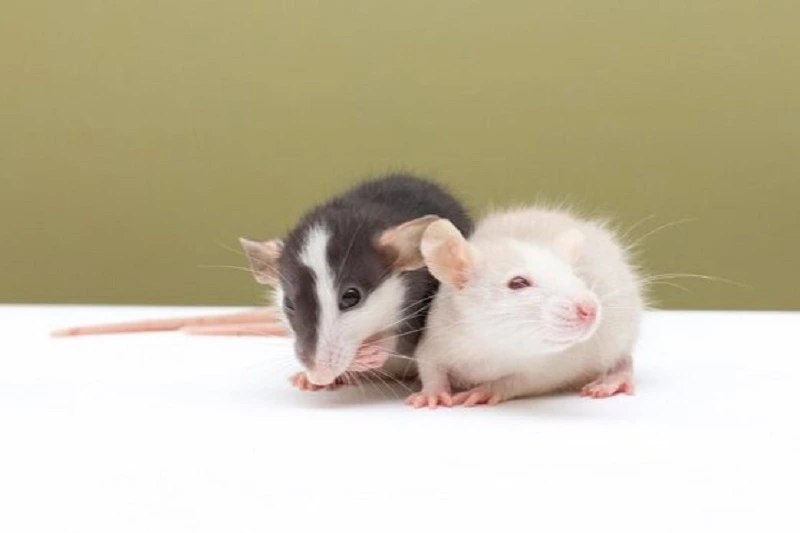
Step 6: Use Consistent Daily Playtime
Mice learn through routine.
Train for:
5–10 minutes
Once or twice per day
Same time daily
This builds habit and confidence.
Trust is not a one-time achievement; it is a daily practice. Mice have relatively short memories for social bonding if the interaction isn’t maintained, so to build a lasting bond, you must prioritize Consistent Daily Playtime to establish a reliable routine.
Try to interact with your mouse at the same time every evening. Whether it’s letting them climb on your shoulders while you sit on the floor or offering them a new foraging toy, consistency builds a sense of security.
During this time, observe their body language. Are their ears forward? Is their tail relaxed? Or are they “freezing”? Daily playtime allows you to learn their specific “dialect” of movement, making you a better guardian and a more effective trainer.
Step 7: Advanced Play Training
Once bonded, you can teach:
Come when called
Follow finger
Jump over small obstacles
Enter tunnels on command
This is real rodent training.
Once the bond is unshakable, you can explore more complex behaviors. Some mice can learn to come when called by a soft whistle or their name. Others enjoy “agility” courses made of household items like books, cups, and ropes.
The key to advanced training is “shaping.” This means rewarding the tiny movements that lead toward the final goal. If you want them to run through a hoop, reward them just for looking at it, then for sniffing it, then for putting their head through it.
At this level, the training is less about the “trick” and more about the shared experience. Your mouse isn’t just performing; they are engaging with an environment that you have made safe and exciting. This level of interaction is the ultimate proof of a deep, trusting relationship.
Common Mistakes to Avoid
Building trust takes weeks; destroying it takes seconds. Even the most well-meaning owners can accidentally set their progress back by forgetting the mouse’s perspective. To succeed in how to train your pet mouse, you must avoid these pitfalls:
Never Grab Your Mouse: Picking up a mouse from above mimics the attack of a hawk. It triggers an immediate “flight or fight” response. Always scoop them from below or let them walk into a cup to be moved.
Never Yell: High-pitched or loud noises are physically painful to a mouse’s sensitive ears and will cause them to associate you with fear.
Never Chase: If your mouse doesn’t want to come out, don’t force it. Chasing them around the cage makes you a predator, not a friend.
Never Skip Days: Inconsistency breeds uncertainty. If you go a week without interacting, you may find yourself back at Step 1.
Never Use Bitter Foods: Using punishment or “negative” flavors has no place in mouse training. It only creates a fearful animal.
Frequently Asked Questions
Conclusion
Learning how to train your pet mouse is not about control — it is about communication, patience, and trust. When you use gentle handling, positive reinforcement, and daily interaction, your mouse begins to see you as part of its safe world, not a threat.
If you are serious about building a happy, confident small pet, you should also understand proper rodent care. This in-depth guide on essential pet rat care for happy, healthy rodents explains how environment, nutrition, and bonding routines directly impact behavior — the same principles that make mouse training successful.
Start today with consistent play, calm handling, and reward-based interaction, and your pet will soon approach you willingly, explore with curiosity, and truly enjoy time with you.