
Pregnancy in rabbits can be both exciting and dangerous if you do not understand what is happening inside your doe’s body. Many rabbit owners miss early warning signs and discover the pregnancy only days before labor. That lack of preparation can put both the mother and her babies at serious risk.
Rabbits hide pain, stress, and biological changes extremely well. Without proper knowledge, you may accidentally cause miscarriage, neglect nutrition, or disturb labor. This guide gives you a complete, expert-level roadmap to manage pregnancy in rabbits safely.
Pregnancy in rabbits is the 28–32 day reproductive period in which a doe carries developing kits inside her uterus, showing physical, hormonal, and behavioral changes until labor, called kindling, occurs.
Understanding Pregnancy in Rabbits
Pregnancy in rabbits begins immediately after mating. Unlike many mammals, rabbits are induced ovulators, meaning ovulation happens due to mating itself. Fertilization is fast, and embryos implant within 48–72 hours.
| Rabbit Breed Size | Gestation Length | Notes |
|---|---|---|
| Small Breeds | 28–30 days | Usually give birth earlier |
| Medium Breeds | 30–31 days | Most common gestation period |
| Large Breeds | 31–33 days | Longer pregnancy due to kit size |
Most does give birth on day 30 or 31.
Key Takeaway: If your rabbit passes day 33 without labor, this becomes a veterinary emergency.
Early Signs of Pregnancy in Rabbits
Within the first 7–14 days, physical signs are subtle. However, behavioral changes are very noticeable.
Common early rabbit pregnancy signs
Increased territorial behavior
Reduced appetite or picky eating
Aggression toward humans or other rabbits
Avoidance of handling
Enlarged nipples
Restlessness
At day 10–14, a skilled veterinarian can gently palpate the abdomen to feel developing embryos.
Physical Changes During Pregnancy in Rabbits
As pregnancy in rabbits progresses, the doe’s body begins preparing for birth.
What changes you will see
Belly enlargement
Heavier breathing
Swollen mammary glands
Weight gain
Increased water consumption
Reduced jumping or activity
By day 25, fetal movement may be visible through the abdominal wall.
Nesting Behavior: A Major Sign of Labor
Nesting behavior is one of the most reliable late-stage indicators of pregnancy in rabbits.
What nesting looks like
Digging in bedding
Carrying hay in mouth
Arranging corners of the cage
Pulling fur from chest and belly
Building a soft nest
This usually happens 2–3 days before labor.
Key Takeaway: Fur pulling does not mean stress. It means labor is approaching.
Signs That Labor Is Starting
True labor (kindling) in rabbits is quiet, fast, and often happens at night.
Rabbit labor symptoms
Sitting still for long periods
Heavy breathing
Lying stretched out
Slight vaginal discharge
Entering nest box repeatedly
Complete silence and isolation
Most does give birth within 15–30 minutes.
What Happens During Rabbit Labor
Rabbits do not scream or push loudly. The entire litter is delivered silently.
Normal rabbit birth process
Doe enters nest
Delivers kits one by one
Cleans them
Covers them with fur
Leaves the nest
There is usually no blood and no crying.
Key Takeaway: If you see bleeding, screaming, or prolonged straining, call a vet immediately.
| Rabbit Breed Type | Average Kits | Description |
|---|---|---|
| Small Breeds | 4–6 kits | Smaller litter, easier delivery |
| Medium Breeds | 6–8 kits | Most common litter size |
| Large Breeds | 8–12 kits | Higher nutrition needed |
What To Do After Birth
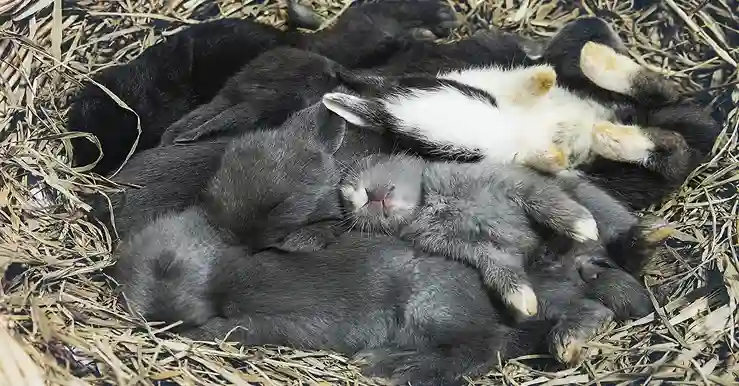
Do NOT touch the babies unless absolutely necessary.
Healthy nest signs
Kits are warm
Bellies are round
Fur is pulled over them
No crying
The mother nurses only once or twice per day. This is normal.
Feeding a Pregnant Rabbit
Nutrition directly determines survival.
What to feed during pregnancy in rabbits
Unlimited hay (timothy or orchard)
Alfalfa hay for calcium
High-quality pellets
Fresh leafy greens
Clean water at all times
Avoid sugar, fruit, or processed treats.
Dangerous Complications
Pregnancy in rabbits can fail without warning.
Emergency signs
No eating
Bleeding
Passing day 33
Collapsing
Refusing to enter nest
Dead kits in nest
Immediate veterinary care is required.
Preventing False Pregnancy
False pregnancy causes nesting without babies. It happens when ovulation occurs without fertilization.
Symptoms include:
Fur pulling
Nest building
Aggression
No birth after 18–20 days
Pregnancy in rabbits is a delicate biological process that requires informed, calm, and consistent care. From early signs to nesting, labor, and nursing, every stage affects survival. When you understand what your doe is experiencing, you dramatically increase the chance of healthy kits and a safe mother.
Prepare her environment, improve her nutrition, and observe her closely. Also make sure her living space stays clean and safe — here’s a complete guide on how to clean a rabbit cage properly.
Healthy pregnancies begin with educated, attentive owners.