
Table of Contents
The Mystery of the Shoe Bandit
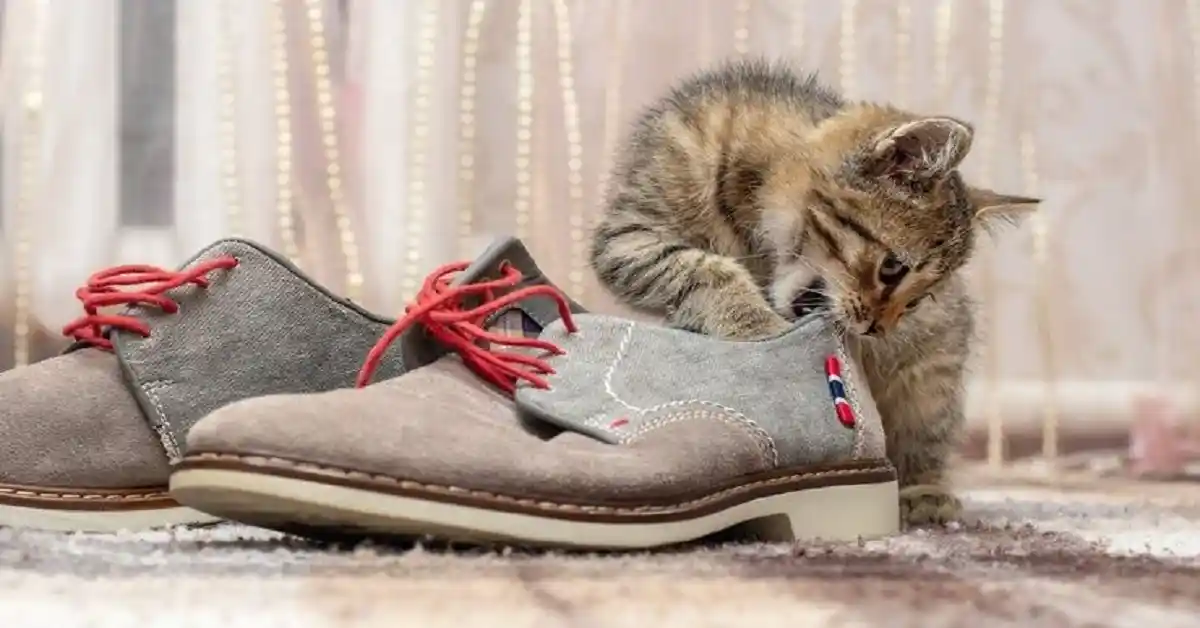
I remember the first time I realized my cat, Oliver, had a genuine obsession. I had just come home from a long day at work, kicked off my sneakers in the hallway, and headed to the kitchen for a glass of water. When I walked back, Oliver wasn’t just sniffing my shoes—he had his entire face shoved inside one, eyes closed, looking like he’d found a portal to another dimension. He wasn’t just curious; he was captivated.
As a long-time cat owner and someone who has spent years studying animal behavior, I used to find this a bit gross. We think of our shoes as dirty, sweaty, and something to be tucked away in a closet. But to a cat, those shoes are a treasure trove of information. Over time, I’ve learned that when we ask, why do cats like shoes, we aren’t just asking about a quirk. We are asking about how our cats perceive the world, how they bond with us, and how they find security in our shared environment.
It took me a while to stop shooing Oliver away. I realized that by understanding this behavior, I was actually getting a glimpse into his emotional state. My shoes weren’t just footwear to him; they were a bridge between his quiet, indoor world and the chaotic, scent-heavy world I navigate every day.
A World Built on Scent
To understand why our feline friends are so drawn to our loafers and boots, we have to step out of our human perspective. We rely heavily on sight. We see a shoe and see leather, laces, and maybe a bit of mud. A cat, however, sees a library.
Cats have a sense of smell that is roughly fourteen times stronger than ours. They possess a specialized organ called the vomeronasal organ, or Jacobson’s organ, located in the roof of their mouth. When you see your cat sniff your shoe and then hang their mouth open in a weird, toothy grimace (the Flehmen response), they aren’t disgusted. They are literally “tasting” the air, pulling scents into that organ to analyze them on a chemical level.
When I watched Oliver do this, I started to realize that my shoes were a daily newspaper. They carried the scent of the grass in the park, the dog I walked past on the sidewalk, the coffee shop floor, and the exhaust of the city. For an indoor cat, your shoes are the most interesting thing that enters the house all day.
Why Your Shoes Are a Sensory Buffet
It’s not just the “outside” world that attracts them. Let’s be honest: shoes hold onto our scent more than almost any other item of clothing. Our feet have thousands of sweat glands, and while that might sound unappealing to us, those pheromones are a direct link to us.
I’ve noticed that cats often prefer the shoes we wear the most. If I leave out a pair of formal shoes I haven’t touched in months, Oliver might give them a passing sniff. But if I drop my daily walking shoes, he’s all over them. This is because those shoes are saturated with my unique biological signature.
In the feline world, scent is the primary way of identifying family and “safe” individuals. By rubbing against your shoes or sleeping on them, your cat is engaging in a deep, sensory conversation with your essence. They aren’t judging your hygiene; they are celebrating your presence.
The Comfort of Your Signature Smell
There is a deeply emotional component to this. Cats are often misunderstood as being solitary or aloof, but they are actually incredibly social creatures that thrive on the “group scent” of their colony. In your home, you and your cat are the colony.
I remember a period when I had to travel frequently for work. My neighbor would come in to feed Oliver, and she’d send me photos of him. Almost every single photo showed him curled up, not on his expensive orthopedic cat bed, but directly on top of the old flip-flops I’d left by the door.
At first, I felt guilty. Was he lonely? Probably. But more importantly, he was self-soothing. My shoes provided a concentrated dose of “me” when I wasn’t there to provide it myself. This is a vital realization for any pet owner: your scent is a source of profound comfort. When a cat lies on your shoes, they are essentially hugging you.
Territory and the Art of Claiming
Cats are territorial by nature. This doesn’t mean they are trying to “own” us in a dominant way, but rather that they want to ensure their environment feels safe and familiar. This is where scent marking comes in.
Cats have scent glands in their cheeks, their paws, and the base of their tails. When you see your cat rubbing their face vigorously against the edge of your boot, they are performing “bunting.” They are depositing their own pheromones onto your shoes.
I like to think of it as a collaborative art project. You bring home the scents of the world, and your cat “edits” them by adding their own scent. By mixing their pheromones with yours, they are creating a harmonious “home scent.” It’s their way of saying, “This person belongs to me, and I belong to this person.” It’s a claim of love and safety.
Stress, Anxiety, and the Leather Security Blanket
While many cats sniff shoes out of curiosity or affection, some do it as a coping mechanism. If you’ve recently moved house, added a new pet, or changed your schedule, you might notice your cat becoming more obsessed with your footwear.
I saw this happen when I brought home a new kitten. Oliver, who was usually quite relaxed, began sleeping exclusively on my sneakers. He wasn’t just marking them; he was seeking out the strongest “safe” smell in the house to buffer the stress of the new intruder.
If your cat seems frantic about your shoes, or if they start vocalizing while hovering over them, it might be a sign of anxiety. In these moments, I’ve learned that it’s better not to take the shoes away. Taking away the “security blanket” only increases the stress. Instead, I make sure to spend extra one-on-one time with them, reaffirming that our bond is secure.
Common Mistakes: When We Misunderstand the Behavior
One of the biggest mistakes I see pet owners make is punishing their cats for being near shoes. I once had a friend who would yell “No!” every time her cat touched her expensive heels. The cat wasn’t trying to ruin the leather; the cat was trying to bond. Punishing a cat for seeking out your scent can lead to confusion and a breakdown in trust.
Another mistake is assuming the cat is “gross” or “dirty.” If we project our human disgust onto them, we miss the chance to see the behavior as an act of affection.
However, there is a practical side to this. Some shoes can be dangerous. I always tell people to be careful with:
Small decorations: Sequins or beads that a cat might chew off and swallow.
Laces: Many cats love to “hunt” laces, which can lead to them swallowing string—a serious medical emergency.
Toxic substances: If you’ve walked through a lawn treated with pesticides or de-icing salt in the winter, your shoes could be carrying toxins.
I’ve made it a habit to wipe down the soles of my shoes or leave them in a mudroom if I’ve been somewhere potentially “chemical,” while still letting Oliver enjoy the upper parts of the shoe where my scent lives.
How to Guide Your Cat (Without Moving the Shoes)
If you’d rather your cat didn’t use your designer heels as a pillow, the key isn’t to stop the behavior, but to provide a better alternative.
I learned this the hard way after Oliver scratched a pair of suede boots. Instead of hiding all my shoes, I took an old t-shirt I had worn to the gym (full of my scent) and placed it inside his favorite cat tree. I then placed one of my “safe” old sneakers nearby.
By giving him an “authorized” scent station, he felt less of a need to seek out my “forbidden” shoes. It’s about meeting their needs on their terms. If they want your scent, give it to them in a way that doesn’t ruin your wardrobe.
Trust is built when we stop fighting their instincts and start working with them. When I stopped seeing Oliver as a “shoe-obsessed weirdo” and started seeing him as a friend who just missed me, our relationship changed for the better.
Interactive Reflection: What Is Your Cat Telling You?
Take a moment to observe your cat the next time you come home. Ask yourself these questions to better understand their specific “shoe language”:
Which shoes do they choose? Is it the ones you wear most often, or the ones you just wore outside? (This tells you if they are seeking you or information).
What is their body language? Are they purring and rubbing (affection), or are they hiding their face inside the shoe (seeking security)?
Does the behavior change? Do they do it more when you’ve been gone longer or when there is a guest in the house?
By answering these, you’ll start to see a pattern in how your cat uses scent to navigate their relationship with you.
Frequently Asked Questions
Conclusion
At the end of the day, the answer to why do cats like shoes is beautifully simple: because they like you. Our shoes are a concentrated, portable version of our identity. They are a map of where we’ve been and a comfort for where we are.
When I see Oliver curled up around my old boots now, I don’t see a mess or a nuisance. I see a little creature who finds peace in my presence, even when I’m not in the room. It’s a reminder that in the feline world, love isn’t just about cuddles and treats—it’s about the quiet, smelly, and deeply personal bond of shared scent.
Understanding these subtle behaviors is just the first step in decoding your pet’s silent language. If you want to dive deeper into how your cat communicates their feelings without saying a word, you should also check out these 10 powerful cat tail talk secrets every owner should know to become a true expert in feline body language.