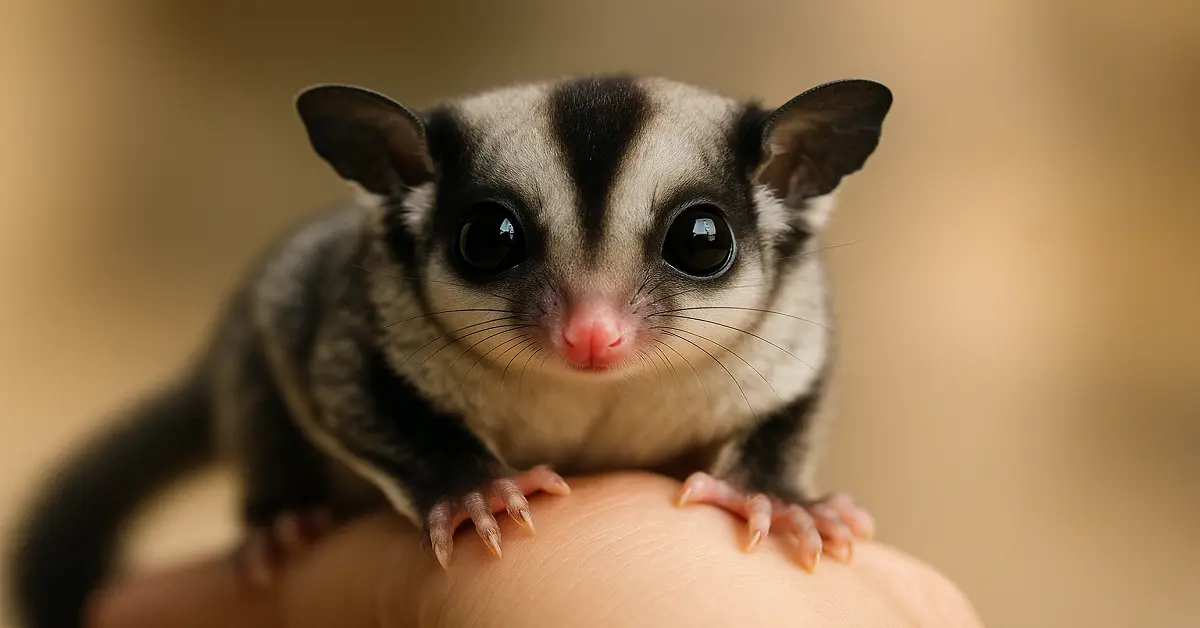

Sugar gliders have gained popularity and, therefore, more information about these cute marsupials can be learned. Petaurus breviceps has a Latin name of Petaurus breviceps that translates as short headed rope-dancer.
Lifespan
Sugar gliders have a lifespan of 12-15 years in the captive environment hence long-term pets.
Size
The body of a sugar glider measures about five or six inches long and this is supplemented by six inches of a tail which is used by the sugar glider as a rudder during gliding. Their weight is only four to five and a half (80 to 160 grams).
Origins
Sugar gliders live in eastern Australia, Papua New Guinea, Tasmania and other islands near it and some areas of Indonesia. They live in the rainforest, sliding the trees and nest in tree holes. They rarely touch the ground.
Anatomy
Sugar gliders are marsupials, which are born extremely helpless and develop in a pouch attached to the abdomen of the mother (similar to a kangaroo or opossum). Sugar gliders possess furry, stretchy and thin membranes, which run between their wrists and ankle (the membrane is known as patagium) that enable them glide as much as 150 feet in the air. Instead of flying they glide between trees in the wild. Their hind feet have an opposable big toe, which is large and used to grasp hold of a branch, and the second and third toes have made a grooming comb. The other toes assist them in clinging to insects and attaching the patagium.
Sugar gliders have big eyes that enable them to see during the gliding and triangulation of launch and landing sites. These eyes are also used in searching food as they are the nocturnal predators. Both genders possess different scent glands, sharp teeth and very soft fur.
Temperament and Behavior
Sugar gliders are extremely social and are in need of companionship and therefore they bond well with their owners, and in particular bonding pouches. But this alone is no use, though people have paid much attention to one sugar glider. They speak their language and live in their colonies of up to 30 in the wild. Keeping a single sugar glider would result in behavioral, mental, emotional, and physical issues with your pet. It may be worth having multiples of gliders in a flight cage since people will never be able to imitate their natural socialization, chirping, grooming and bonding.
Diet
Sugar gliders are omnivores and a different range of foods consumed in the wild varies according to the season. Being pets, they normally need the diets prescribed by the professionals and zoos, including many different foods. An insectivore pellet should be used to form the diet base, and this is to provide rounded nutrition and dental wellbeing. Add baby food, honey, fruits, vitamins, fresh produce and insects. Pre-prepared insectivore diets are sold at pet stores and online and are usually given to the sugar glider colonies in zoos. This is because when we read about sugar gliders, our knowledge on their dietary requirements changes.
Health
Other exotic pets such as sugar gliders have the potential to develop multiple disorders. Problems such as metabolic bone disease due to bad dieting, injuries because of being caught up and gliding, diarrhea due to the overuse of fruit, dental depression and parasites are common.