
Your dog just like yourself should be exercised in order to remain fit and healthy. The benefits of a good workout with your dog include preventing obese conditions, slowing cognitive loss, encouraging healthy joints and muscles, enhancing the cardiovascular system, and giving you wonderful bonding. When you are designing an exercise regimen with your pup (and maybe yourself), you will want to remember the amount of exercise a dog requires.
Get to know how much exercise does your dog need and the method of knowing whether your pet is on the same workout program or not.
The Determinants of the Exercise Requirement of a Dog.
As much as we can (and will) give some general guidelines on the exercise needs of the dog, it is necessary to keep in mind that every dog is an individual. The requirements of your dog to exercise depend on his breed, age, health status and personality.
Breed
The breed of your dog may affect the activity that you require. To illustrate this, a pug or mastiff may like to sit and relax in the house the whole day long, but more active dogs such as Siberian huskies or Jack Russell terriers may start showing behavioral problems as they fail to get the exercise they need.
The intensity of exercise may also be influenced by breed specific features. A dog with a flat face (brachycephalic) such as the one mentioned above like the pug might not be able to breathe and heat up as a result of overworking him or her when exercising. Dogs with longer snouts such as huskies will normally breathe more easily regarding the high-intensity workout period.
The pug may be satisfied with a single 20-30 minute walk whereas the husky may require a three half-hour of fast-walking around the area to release their energy.
Age
The exercise needs of your dog are also affected by the age of your dog. Puppies tend to have fun when they are in short sprints. Other veterinarians suggest that puppies should be given five minutes of exercise after every month of age once or twice a day. Therefore, they can do about thirty minutes of activity sessions by the time they are six months old.
On the other side of the scale, one should not forget about old dogs! A bad mistake to make is to quit exercising your dog because he is old. All you have to do is take into account whether your dog has some health problems such as arthritis, and make appropriate changes. Older dogs respond better to low-intensity exercises such as a slow walk.
Health Status
Other health conditions can reduce the exercise intolerance of your dog. The most common examples of health complications that can affect exercise requirements of your dog are:
⦁ Arthritis
⦁ Respiratory disease
⦁ Heart disease
⦁ Obesity
⦁ Hypothyroidism or Cushing disease Endocrine disorders.
Your dog may have a long-term health issue, and it is always wise to clear out the exercise plans of your dog with your veterinarian.
Personality
It is important to remember that dogs are persons! Labrador retrievers can be couch or dock-diver potato. You will have to take into consideration that your pet needs to communicate, be mentally challenged and move about when determining the amount of exercising that your pet requires.
General Exercise Recommendations on Dogs.
General guidelines of exercising any dog include the following:
⦁ Daily exercise ought to be done by your dog.
⦁ It is preferable to a long exercise once a week instead of a short one per day.
⦁ At least one 20-30 minutes of a low-energy adult dog should be leisurely walk. A well-to-do dog that is of high energy should have at least two, 30-minute brisk walks.
⦁ Ask your veterinarian about the exercise that is recommended and forbidden to your growing puppy.
⦁ Pay attention to the weather. There are dogs which are more susceptible to temperature extremes, and it is risky to leave your dog on hot or frozen surfaces in the course of their pawing.
⦁ Avoid carrying water to hot and/or humid days.
The list of exercises that are appropriate to dogs is given below:
Hiking
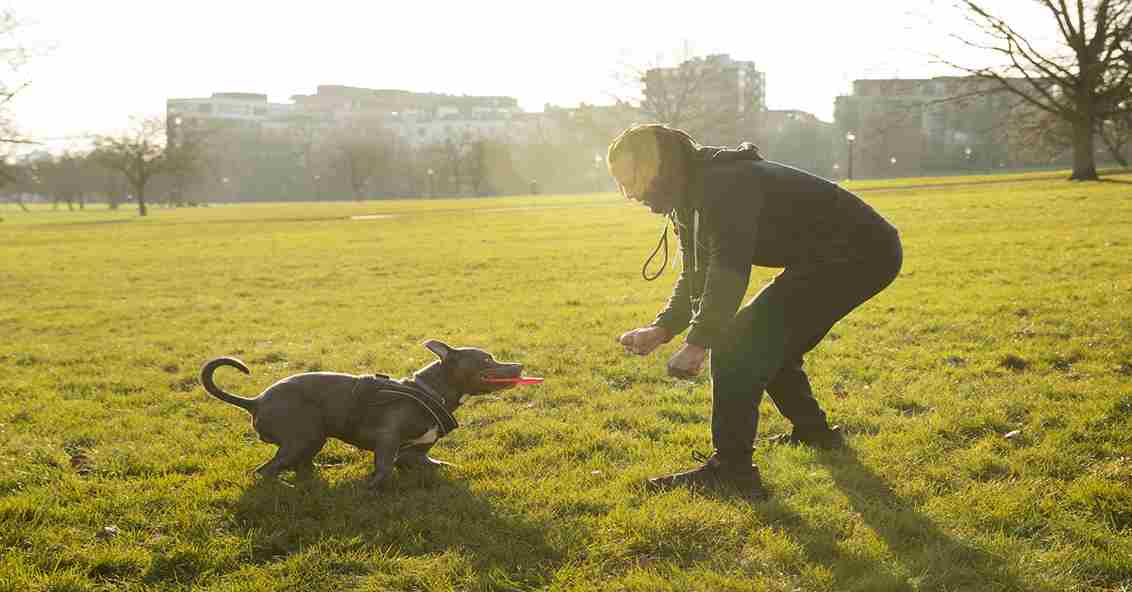
Running around playing fetch, tug-of-war or hide-and-seek.
Swimming (in safe locations)
Sophisticated training courses like agility training.
Racing over an obstacle course that was constructed in the backyard.
Dock diving
Frolicking with other friendly dogs.
Indications that Your Dog is Not Exercising enough.
In case you are not certain whether your dog is exercising sufficiently, you should refer to the behavior and health of your dog.
Behavioral Issues
The dogs that lack the exercise are at higher risk of developing behavioral problems especially anxiety. Fears in dogs may be in form of whining, barking, pacing, destructiveness, house-soiling and self-mutilation. Chewing on the objects that they are not supposed to, taking you toys several times, and asking you to take him outside also all mean that your dog might need more exercise (and some attention, too!).
Health Problems
Without exercising, dogs are likely to develop some health complications such as obesity and arthritis. Nevertheless, when you realize that your dog is experiencing health issues, you must always have them examined by a veterinarian to avoid thinking that the dog requires more physical activities.
Symptoms of over-exercise in the dog.
Symptoms of the overexercise of your dog include:
Attempting to rest and lie down during exercise.
Heavy panting
Excessive drooling
Reddened gums and/or tongue
Pain and exercise stiffness and limping.
You should also be conversant with the symptoms of heat exhaustion in order to take action in case your dog is overheating.
The Finish Line
Daily exercises are needed and desired by your dog, however, you will have to train your dog to suit his or her needs. In case you are unsure about the exercise need of your dog, then you should consult your veterinarian.