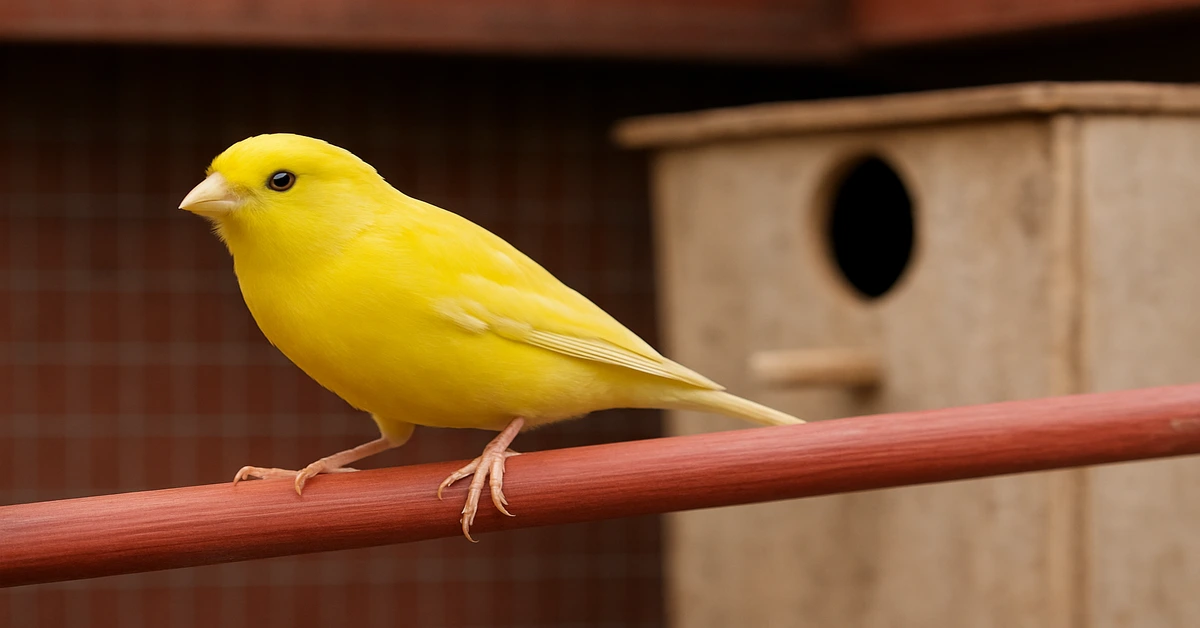

Canary Bird Care: Canary is a friendly little bird, and easy to learn, simple little bird. It has a beautiful personality and a sweet tune that can make many people become life long fans. These are the birds that are selectively bred and thus appear in many colors, sizes, and varieties of singing hence a good companion. Canaries are not expensive either and they are readily available in pet stores.
Origin and History
The Wild canaries are tiny finches that grown up on the Macaronesian islands such as Azores, Madeira and the Canary Islands. Being bred in captivity since the 17th century, they landed in Europe through the Spanish sailors since the conquest of these islands. The pet store canaries are genetically different today as compared to their wild ones.
The canaries are able to interbreed with other species of finches, creating some special hybrids. An example is the red canaries, which occurred as the result of breeding domestic canaries with red siskins, a South American finch.
More: America’s Favorite Bird
Temperament
Canaries love people, yet do not like to be handled much like budgies and parrots. They make smart birds and lots of their owners condition them to sit on their hand or fly within a room. Young birds are more readily trained, but it becomes possible through patience and regularity to make most canaries tamed and trained.
Canaries are rather solitary and will not get lonely when kept alone. They are able to live together in an aviary with other small birds. Nevertheless, two male canaries should not be kept together because they are apt to engage in fights.
Speech and Vocalizations
The canary, especially the male is famous because of its singing. Such prominent ones are Waterslager, German Roller, Russian Singer, Spanish Timbrado, and American Singer. The canaries are mainly female chirpers and the males elaborate it. Canaries normally fail to sing during the molting period.
Canary Colors and Markings
The wild canaries are greenish-yellow in body and yellow underneath. Selective breeding has led to the adoption of domestic canaries of bright colors, including orange, white, red, and yellow with yellow prevailing.
Caring for the Canary
One canary needs a cage that is 20 inches wide and 24 inches long. These birds like flying and as such a cage that is longer than it is wide is the best. Do not cut the wings of a canary, he must fly to get his exercise. The cage bars must not exceed 1/2 inch apart so that the canary does not get his head caught up between. Wire cages can be cleaned easily as compared to wooden cages.
Several wooden perches (diameter of 3/4 to 3/8 inch) should be placed in the cage so that the canary can have the opportunity of resting his feet and exercising them. Cut notches in the perches to make the surface uneven to have a better grip. A different range of perch diameters maintains the limberness of the feet of the bird. Do not place perch covers made of sandpaper because this may hurt the feet of the canary.
Canaries are robust and can survive room temperature, however they must not be kept in the cage where they can be exposed to drafts, air conditioners, and direct sunlight as that may cause them to overheat. A canary with the mouth and wings open situated outside the body is overheated. A swollen canary can be too much benumbed.
Bathe the canary by giving him/her a shallow dish of water or a bath in the pet shop at least thrice or four times a week to have a bath or splash around.
Wrap the cage at night so that the canaries can get a good sleep. They prefer a natural light/dark cycle because it is not stressful to leave them up with artificial light.
Common Health Problems
Poor diet, dirty cages or drafts of canaries are often the cause of health problems. Unwell birds may lose weight and die very fast hence avian veterinary assistance must be sought should symptoms such as baldness, scaly legs, diarrhea, constipation or lethargy begin to appear. Canaries are air sensitive; they should not be exposed to smoke or cooking or solvent fumes.
Canaries are also exposed to infections by some viruses, fungi, as well as bacteria. They have the ability to obtain some treatable bacterial infections like avian gastric yeast infection, candidiasis and chlamydia. There are other infections such as bumblefoot that cause swelling and wounds and mycoplasma, which is treatable, causes the discharge of the eyes and nose. On the other hand, tuberculosis is a chronic and incurable respiratory disease that is fatal.
Canary lethal viruses are polyomavirus and avian pox. Aspergillus is a common deadly fungus that in certain cases may yield to antifungal medicine.
Diet and Nutrition
Canaries in the wild browse mainly on seeds although they may occasionally consume insects.
Make sure that domesticated canaries also receive the best quality seed mixtures (vitamin-coated) that are specifically designed to be eaten by them. Eat the seed hulls out every day so that the food is easily available. Pellet food is an option though it is not usually as palatable as seeds. Within the cage keep dishes of the following: pellets, and seeds.
Add portions of vegetable greens such as kale, broccoli, dandelions, spinach, celery, peas and watercress to the daily diet of your canary. Provide little of fruits like apples, oranges, grapes, bananas or melons. Use hard-boiled pieces of eggs as the protein supplement.
Exercise
Canaries need room to move. In the cage, it is important to keep the cage clear so that there is movement between perches. In contrast to parrots, canaries require little enrichment and a toy, a mirror, or a branch are enough. Exercise is also given in bathing. Sometimes toy swings, bells or hanging toys can be used as a reward.
When the canary has become used to you, give him time to fly about the room, the time required to do which is about an hour, per day. Monitor this time making sure that the windows are closed, ceiling fans turned off, and other pets are not present.
Where to Adopt or Buy a Canary
Canaries are available in most of the pet stores, but in special varieties you might require a breeder. Sometimes canaries are available in the rescue organizations and adoption societies but this is very infrequent. Depending on the type, canaries are priced between 25 and 200. Some sources are available online (Adopt a Pet, Petfinder, and Bird Breeders).
In the event of selecting a breeder, be sure that they have a good reputation by asking them how long they have been working with canaries and asking them to have a look around their premises.