
The boa constrictor snake is one of the most widely recognized snakes in the world, yet it remains one of the most misunderstood. Its large size and muscular build often create fear, but in reality, the boa constrictor is a calm, non-venomous species that plays an important role in maintaining ecological balance.
Native to Central and South America, boa constrictors inhabit a wide range of natural environments, including tropical rainforests, dry forests, wetlands, and savannas. Their ability to adapt to different climates and landscapes has allowed them to survive environmental changes that have challenged many other reptile species.
This guide presents a clear, factual, and wildlife-focused overview of the boa constrictor snake. Rather than relying on myths or exaggeration, it explains how the species lives in the wild, how it hunts, where it thrives, and why it matters to the ecosystems it inhabits. The purpose is simple: to help readers understand the boa constrictor as it truly is—a vital part of nature, not a creature to fear.
What Is a Boa Constrictor Snake?
A boa constrictor is a large, non-venomous snake belonging to the family Boidae. Unlike venomous snakes that rely on toxins, boa constrictors subdue their prey through constriction. After striking, the snake wraps its body around the animal and tightens gradually, restricting blood flow until the prey loses consciousness.
This hunting method is highly efficient and energy-conserving. Once the prey is subdued, the boa constrictor swallows it whole, usually head-first. Because digestion requires significant energy, the snake may not eat again for weeks after a large meal.
Boa constrictors are ambush predators. They do not chase prey or display aggressive behavior. Instead, they rely on camouflage, patience, and precise timing. In the wild, they spend much of their time resting or remaining hidden, becoming active mainly when hunting or relocating within their territory.
Natural Temperament and Behavior in the Wild
Despite popular belief, the boa constrictor snake is not naturally aggressive. In its natural habitat, it avoids unnecessary conflict and relies on stillness rather than confrontation. Most defensive behavior occurs only when the snake feels threatened, cornered, or startled.
Boa constrictors move slowly and deliberately. This behavior reduces energy expenditure and helps them remain unnoticed by both prey and potential threats. When disturbed, a wild boa constrictor is far more likely to retreat into vegetation or remain motionless than to strike.
This calm temperament is one of the reasons the species has survived for millions of years. By avoiding unnecessary risk and conserving energy, boa constrictors increase their chances of long-term survival in changing environments.
Physical Characteristics of the Boa Constrictor Snake
The physical structure of the boa constrictor is designed for strength, endurance, and camouflage rather than speed.
Size and Body Structure
Adult boa constrictors typically grow between 6 and 10 feet in length. In rare cases, especially among large females, individuals may exceed this range. Females are generally longer and heavier than males, a common trait among constrictor species.
Their bodies are thick and muscular, particularly around the midsection. This muscular build allows them to generate the force needed for constriction while maintaining stability during long periods of rest.
Skin, Scales, and Coloration
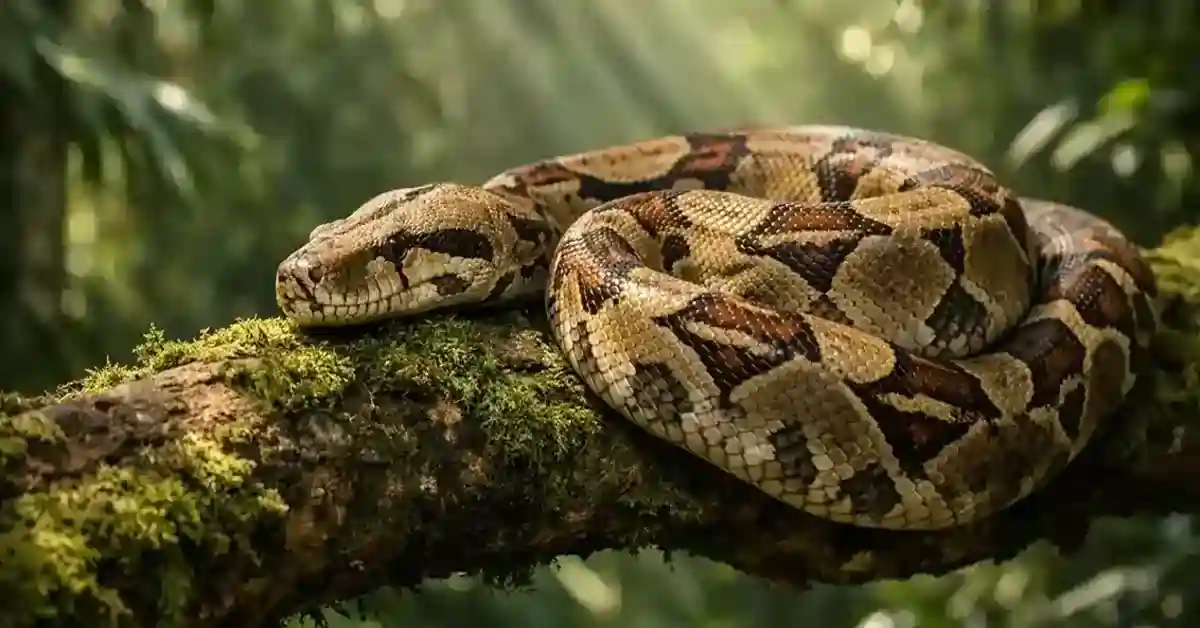
Boa constrictors display a wide range of natural color patterns, including shades of tan, brown, gray, and cream. Dark saddle-shaped markings run along the back, becoming more pronounced toward the tail.
These patterns are not decorative—they serve a critical survival function. In forested environments, the coloration helps the snake blend into leaf litter, tree bark, and shadows, making it difficult to detect even at close range.
Where Boa Constrictors Live in the Wild
The natural habitat of the boa constrictor snake extends across large parts of Central America, South America, and select Caribbean islands. Rather than being limited to a single ecosystem, the species thrives in multiple environments.
Boa constrictors are commonly found in:
- Tropical rainforests
- Dry forests and savannas
- Grasslands with dense cover
- Wetlands and riverbanks
They are frequently observed near water sources, as they are capable swimmers and use water for both hunting and temperature regulation.
Arboreal and Ground-Based Lifestyle
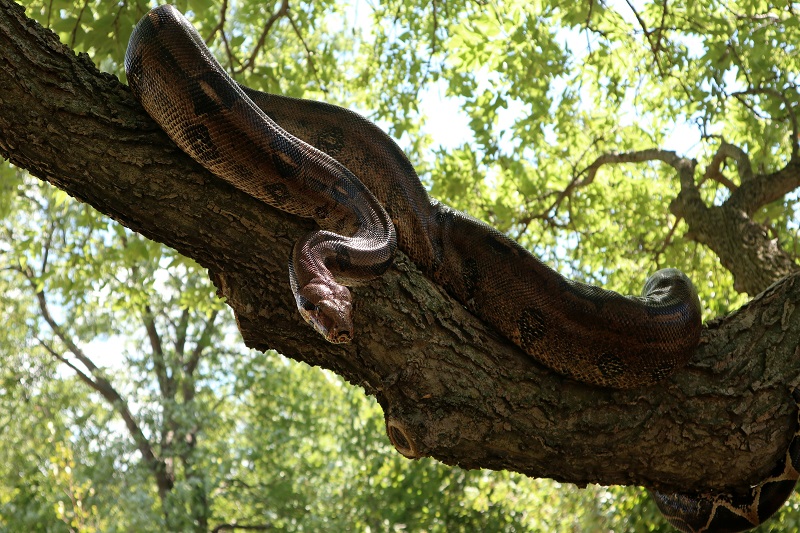
Boa constrictors are considered semi-arboreal, meaning they use both trees and the ground depending on age and size. Younger individuals often climb trees to avoid predators and hunt small prey. As they grow heavier, adults spend more time on the forest floor.
This flexible lifestyle allows the species to exploit a wider range of food sources and shelter options. It also helps explain how boa constrictors adapt to changing environments, including areas affected by seasonal flooding or human activity.
Why Boa Constrictors Matter in Nature
The boa constrictor snake is not just a large predator—it is an important regulator within its ecosystem. By controlling populations of rodents and small mammals, it helps maintain balance in food chains and reduces the spread of disease.
In regions where boa constrictors decline, prey populations often increase rapidly, leading to ecological imbalance. This makes the species an important indicator of environmental health in tropical and subtropical ecosystems.
Habitat and Ecosystems: Where Boa Constrictors Thrive
The boa constrictor snake is notable for its ability to live across a wide range of natural environments. Unlike species that depend on a single ecosystem, boa constrictors are ecological generalists. This flexibility has allowed them to survive environmental changes and habitat variation over long periods of time.
In the wild, boa constrictors are most commonly associated with tropical regions, but their habitats extend far beyond dense rainforests. They are found in areas where shelter, prey availability, and suitable temperatures overlap.
Tropical Rainforests
Tropical rainforests provide ideal conditions for boa constrictors. Dense vegetation offers excellent camouflage, while high biodiversity ensures a steady supply of prey. Fallen logs, thick undergrowth, and low tree branches serve as natural hiding places and ambush points.
In these environments, boa constrictors rely heavily on stillness. Rather than moving frequently, they position themselves in locations where prey is likely to pass. This strategy minimizes energy use and reduces exposure to predators.
Dry Forests and Savannas
Boa constrictors are equally capable of surviving in drier regions, including seasonal forests and savannas. In these habitats, temperatures can fluctuate more dramatically, and vegetation is less dense.
To adapt, boa constrictors:
- Become more active during cooler evening hours
- Seek shelter in burrows, rock crevices, or shaded vegetation
- Reduce daytime movement to avoid overheating
This ability to adjust behavior based on climate conditions is a key factor in the species’ wide distribution.
Wetlands and Riverbanks
Boa constrictors are strong swimmers and are frequently found near rivers, streams, and wetlands. Water sources attract prey and provide opportunities for temperature regulation.
In wetland environments, boa constrictors may hunt animals that come to drink or move through shallow water. Swimming also allows them to escape threats and travel between fragmented habitats.
Daily Behavior and Activity Patterns
The boa constrictor snake follows a calm, energy-efficient daily routine. Rather than being constantly active, it spends much of its time resting, conserving energy for hunting and digestion.
Nocturnal and Crepuscular Activity
Boa constrictors are primarily nocturnal or crepuscular, meaning they are most active during dusk, nighttime, and early morning hours.
This timing offers several advantages:
- Reduced exposure to daytime heat
- Increased success in ambush hunting
- Lower risk of encountering large predators
During daylight hours, boa constrictors typically remain hidden under vegetation, inside hollow logs, or within shaded areas.
Movement and Territory
Boa constrictors do not maintain strict territories in the way some animals do. Instead, they occupy home ranges that overlap with other individuals. Movement within these ranges is slow and deliberate.
They relocate mainly to:
- Find suitable hunting locations
- Access water
- Seek shelter during extreme weather
This low-movement lifestyle reduces energy demands and increases long-term survival.
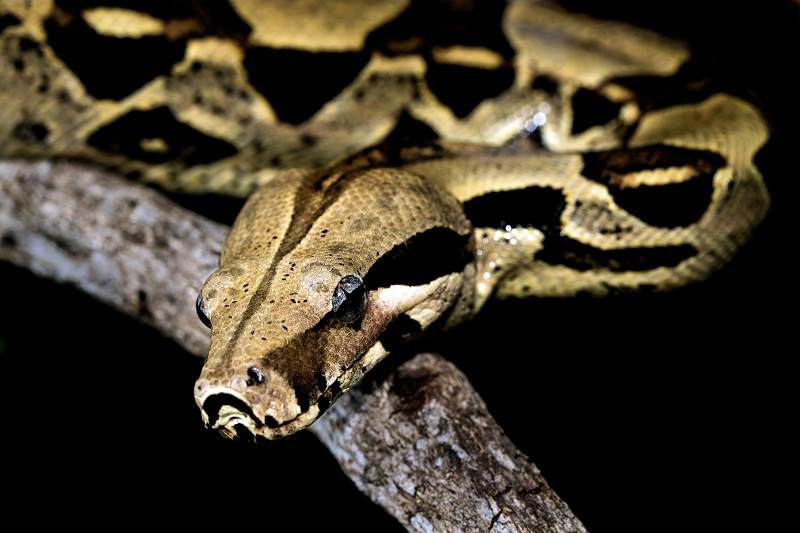
Hunting Strategy and Feeding Behavior in the Wild
Boa constrictors are ambush predators, not active chasers. Their hunting success depends on patience, positioning, and sensory adaptation rather than speed.
How Boa Constrictors Detect Prey
Boa constrictors use a combination of senses to locate prey:
- Vision to detect movement
- Smell to track scent trails
- Heat-sensitive labial pits to sense warm-blooded animals
The heat-sensing ability is especially valuable in low-light conditions, allowing the snake to hunt effectively at night.
Constriction Explained Simply
Once prey is within range, the boa constrictor strikes quickly and secures the animal. It then coils its body around the prey and tightens gradually. Contrary to common myths, the snake does not crush bones. Instead, it restricts blood flow, causing the prey to lose consciousness.
This method is efficient and minimizes struggle, reducing the risk of injury to the snake.
What Boa Constrictors Eat in the Wild
Diet varies depending on the size and age of the snake. Typical prey includes:
- Rodents such as rats and mice
- Birds and bats
- Lizards and other small reptiles
- Small mammals
Larger adults may occasionally prey on animals such as monkeys or wild pigs, though such events are uncommon.
After consuming a large meal, a boa constrictor may not need to eat again for several weeks. During digestion, the snake remains largely inactive, focusing energy on breaking down the meal.
Growth, Shedding, and Physical Development
Boa constrictors grow steadily throughout their lives, though growth rate slows with age.
Growth Stages
- Juveniles grow rapidly during their first few years
- Sexual maturity is typically reached around four to five years
- Adult growth continues slowly, mainly in body mass rather than length
Environmental conditions and food availability play a significant role in determining growth patterns.
Shedding Cycle
Shedding is a natural process that allows the snake to maintain healthy skin and remove parasites. Before shedding, a boa constrictor may appear dull in color and less active.
After shedding, the skin appears brighter and more defined. This process is essential for long-term health and survival.
Adaptations That Support Long-Term Survival
The success of the boa constrictor snake is rooted in a combination of physical and behavioral adaptations.
- A slow metabolism that allows long periods without food
- Muscular strength for efficient constriction
- Camouflage patterns that reduce detection
- Behavioral flexibility across habitats
Together, these traits allow boa constrictors to survive environmental changes that affect more specialized species.
Are Boa Constrictor Snakes Dangerous to Humans?
The size and strength of the boa constrictor snake often lead to fear, but scientific observation and real-world data show a very different reality. Boa constrictors are not considered dangerous to humans under normal circumstances.
They are non-venomous and do not hunt people. In the wild, boa constrictors are cautious animals that avoid confrontation whenever possible. Most human encounters occur accidentally, such as when a snake is surprised while resting or moving through vegetation.
Boa constrictors are adapted to hunt animals much smaller than humans. Their feeding behavior, body mechanics, and hunting instincts are all designed for small to medium-sized prey. Humans do not fall within their natural prey range.
When left undisturbed, a wild boa constrictor will almost always choose to remain still or retreat rather than defend itself. Understanding this behavior is essential for reducing unnecessary fear and conflict.
Common Myths and Misunderstandings
Much of the fear surrounding boa constrictors comes from myths rather than facts. Clearing up these misconceptions helps create a more accurate picture of the species.
Myth: Boa constrictors attack people.
In reality, they avoid human contact and only react defensively when threatened.
Myth: They crush bones during constriction.
Boa constrictors restrict blood flow, not skeletal structure. This method is efficient and minimizes struggle.
Myth: Large snakes are naturally aggressive.
Boa constrictors are slow-moving and deliberate. Aggression is not part of their natural behavior.
Scientific research consistently supports the view that boa constrictors are calm, predictable animals when left in their natural environment.
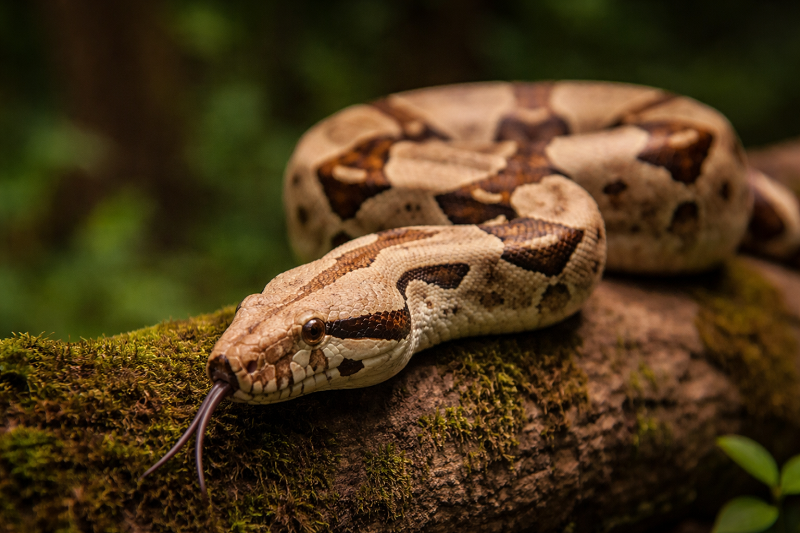
Ecological Importance of the Boa Constrictor Snake
The boa constrictor snake plays an important role in maintaining ecological balance across the ecosystems it inhabits. As a mid-to-upper-level predator, it helps regulate populations of rodents and small mammals.
Without predators like boa constrictors, prey populations can grow rapidly. This overpopulation can lead to habitat degradation, increased crop damage, and the spread of disease. In this way, boa constrictors indirectly support both natural ecosystems and human agricultural areas.
Because they are sensitive to habitat disruption, boa constrictors also serve as indicators of ecosystem health. Declining populations often signal broader environmental problems such as deforestation or loss of biodiversity.
Conservation Status and Threats
Are Boa Constrictors Endangered?
Globally, boa constrictors are not classified as endangered, but their conservation status varies by region. In some areas, populations remain stable, while in others they are declining due to human activity.
Major Threats in the Wild
The most significant threats to boa constrictors include:
- Habitat loss caused by deforestation and land development
- Illegal wildlife trade, including capture for skins or sale
- Road mortality in areas where habitats intersect with human infrastructure
- Fear-based killing driven by misunderstanding
Although the species is adaptable, rapid environmental change can overwhelm local populations.
Conservation Efforts and Protection
In many countries, boa constrictors are protected by wildlife laws that regulate capture and trade. Conservation efforts increasingly focus on habitat preservation, public education, and reducing conflict between humans and snakes.
Long-term survival depends not only on legal protection but also on changing public perception. When people understand the ecological value of boa constrictors, unnecessary killing decreases significantly.
Living Alongside Boa Constrictors
In regions where humans and boa constrictors share the landscape, coexistence is both possible and beneficial. These snakes help control rodent populations around farms and rural communities, reducing crop damage and disease risk.
Most encounters are brief and harmless. Simple awareness—such as avoiding tall grass at night or leaving undisturbed snakes alone—greatly reduces the chance of conflict.
Education plays a key role in helping communities coexist safely with wildlife.
Why the Boa Constrictor Snake Matters
The boa constrictor is not just a large snake—it is a highly evolved species shaped by millions of years of natural selection. Its survival strategies emphasize efficiency, patience, and balance rather than aggression.
By understanding how boa constrictors live and interact with their environment, we gain insight into the complexity of tropical ecosystems. Protecting this species helps preserve the broader ecological networks that depend on healthy predator–prey relationships.
The boa constrictor snake is a calm, adaptable, and ecologically important species that has survived by avoiding conflict rather than seeking it. Despite its size, it poses little threat to humans and plays a vital role in maintaining healthy ecosystems.
Understanding the boa constrictor through facts rather than fear allows for better coexistence and more effective conservation. As habitats face increasing pressure from human activity, protecting species like the boa constrictor becomes essential—not just for the snake itself, but for the ecosystems it supports.
Frequently Asked Questions
Is a boa constrictor venomous?
No. Boa constrictors are non-venomous snakes and rely on constriction rather than venom to subdue their prey.
Where do boa constrictors live in the wild?
Boa constrictors inhabit Central and South America, including forests, savannas, wetlands, and riverbanks.
How long do boa constrictor snakes live?
They typically live between 20 and 30 years in the wild, with longer lifespans possible in protected environments.
Do boa constrictors help the environment?
Yes. By controlling prey populations, boa constrictors help maintain ecological balance and support healthy ecosystems.